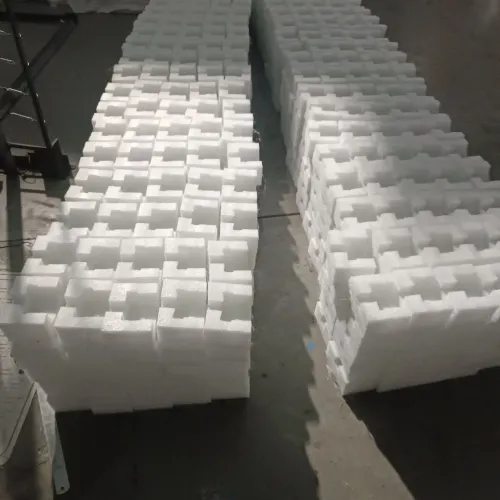



Fragile goods face three different threats in distribution: sudden shock, continuous vibration and the weight of cartons stacked above them. By the end, you will know how to orient, size and combine paper honeycomb components with an outer package so each threat has a defined protection strategy.
Key takeaways
- Match honeycomb thickness to product weight and expected impact.
- Use bearing areas that spread pressure instead of concentrating it at corners.
- Combine honeycomb with an outer carton, blocking, bracing and a closure system.
- Run drop, compression and vibration tests before approving production packaging.
How the honeycomb structure manages shipping forces
Paper Honeycomb Packaging manages shipping forces through its cell walls, not by acting as a simple spacer. Under impact or pressure, the cells deform and spread the load across a wider panel area, reducing the force concentrated at one corner, edge or contact point.
The carton, insert and product must still form a controlled load path.
- Shock: During a drop, honeycomb components crush or flex over a limited distance, slowing the transfer of energy. A flat pad beneath a product distributes impact into the carton floor, while edge blocks stop the product from striking the carton wall. Without enough crush distance, the structure passes the impact through almost unchanged.
- Vibration: During vehicle movement, blocking and partitions limit repeated product movement. That prevents rubbing, rattling and repeated contact with the carton, while the panel spreads small oscillating loads across its surface. Honeycomb reduces movement; it does not replace cushioning selected for the product’s fragility.
- Compression: In a stacked load, the cells carry force along their strongest direction and distribute pressure over the carton base or product support. This keeps the carton wall, lid or another package from pressing directly on a fragile surface.
A panel can still buckle if its bearing area is too small, its orientation is wrong or humidity has weakened the paper.
Effective Shipping Protection therefore combines honeycomb blocking and load distribution with separate cushioning where the product needs shock isolation. Leave clearance at corners and edges, prevent insert migration, and keep the product from becoming part of the package’s structural frame.
How to lay out protection for different fragile products
Match protection to the product’s breakage points, not simply its outer dimensions. A glass bottle needs a sleeve, base and neck restraint; a flat display panel needs broad face pads and edge protection; a precision assembly needs a fitted insert that stops migration without pressing delicate parts.
| Product shape or risk | Suitable layout | What it prevents |
|---|---|---|
| Cylinders, bottles and tubes | Honeycomb wrap or sleeve, with caps at the base and neck | Rolling, end impact and contact at the glass wall |
| Flat panels, screens and artwork | Face pads, edge rails and corner blocks with a wide bearing area | Scratches, flexing and corner fracture |
| Boxes with exposed corners | Corner protectors plus top and bottom honeycomb pads | Corner bypass around a flat pad |
| Small separate components | Partitioned cells with individual interleaving | Part-to-part impact and rattling |
| Irregular assemblies | Custom-cut insert with braces around strong zones | Movement and force on thin walls, lenses or controls |
| Partially filled cartons | Honeycomb blocking and restrained void-fill pieces | Product migration into the carton wall |
Use cushioning between the product and rigid honeycomb wherever the surface is polished, brittle or load-sensitive. Honeycomb is stronger as blocking, bracing and load distribution than as a complete cushion; a narrow brace can crush locally or create a new fracture point.
- Put caps or liners over concentrated contacts.
- Keep honeycomb cells oriented so expected compression loads act through the cell depth.
- Leave clearance around fragile projections, then block movement at stronger structural areas.
- Lock partitions and inserts to the carton so they cannot shift during vibration.
This Protective Packaging layout keeps the product out of the carton walls while spreading impact over a larger bearing area.
How to choose cell size, thickness and bearing area
Match the insert to the load path: product weight sets the required compression strength, but geometry and contact area decide whether that strength reaches the product safely.
| Design variable | Match it to | Selection logic |
|---|---|---|
| Cell size | Product geometry and contact width | Use smaller cells for narrow edges, curved surfaces and fine support; larger cells suit broad, flat loads when weight and handling space matter more. |
| Paper grade | Product weight, humidity and surface risk | Choose stronger, higher-basis-weight paper for heavy loads, high humidity or repeated handling. Add a liner where open cell ends could abrade or puncture a finish. |
| Panel dimensions | Product footprint and movement | Extend the panel beyond the contact zone so the carton and insert carry the load together. Size blocking to stop migration before the product reaches a wall or corner. |
| Thickness | Gap, impact travel and buckling risk | Increase thickness when the insert must bridge a wider gap or resist longer compression. Thickness cannot correct a tiny bearing area. |
| Compression strength | Stacking and contact loads | Specify strength above the expected static load, then verify it with the complete package after humidity conditioning. |
Spread concentrated force with a cap, liner or wider pad. A narrow brace against a glass edge, thin wall or polished surface can crush cells and damage the product even when the panel’s overall rating looks adequate.
For Fragile Product Packaging, treat honeycomb as blocking, bracing and load distribution rather than the only cushion. Combine sufficient bearing area with separate cushioning where drops demand energy absorption, and keep the product from becoming part of the load path.
How to build the honeycomb into the complete shipping package
A package fails when the product can move far enough to strike the carton, or when a brace transfers force into a glass edge. Build the honeycomb into a load path: the outer container carries stacking loads, while inserts, pads and braces restrain the product without making it part of the structure.
1. Fit the product with cushioning that protects its surfaces, then add honeycomb end blocks, corner pieces or edge rails at the points where movement could create concentrated loads.
2. Dimension the insert so the product cannot migrate during vibration. Bond or mechanically lock partitions, pads and braces to a sleeve, liner or base panel; a loose honeycomb sheet becomes debris instead of Shipping Protection.
3. Place load-bearing honeycomb panels beneath the product and between stacked units, with their faces fully supported by the carton, crate or outer box. Add perimeter rails so stacking force bypasses the product rather than crushing it.
4. Close every void with fitted blocking, not a large soft gap. Keep clearance at fragile surfaces, but prevent corner impact and brace bypass at the same time.
5. For long-duration compression, use sufficient panel area and edge support, then check that the carton walls and closure hold the insert in position. A strong panel cannot rescue a weak box.
6. Control moisture with a liner, barrier bag or sealed outer package when exposure demands it. Condition the complete Protective Packaging system under the intended humidity using ASTM D4332 before distribution testing; paper strength and dimensions change with moisture.
Test the assembled package in its real orientations under ASTM D4169 hazards, including vibration, impacts and compression.
How to test the design and decide whether it is ready for production
Approve a design only after the complete product-package system survives the hazards in its intended distribution cycle. Use ASTM D4169 to select repeated drops, vibration, compression and handling impacts that match the shipping mode, and test every shipping orientation with the product inside.
Condition packages under ASTM D4332 before testing. Include the humidity and temperature range expected in refrigerated, maritime or humid distribution; dry-lab results can overstate paper strength and compression performance. Add sustained compression at the intended stack height, dwell time, temperature and humidity because paper honeycomb deforms over time.
| Option | Main strength | Limitation | Best comparison |
|---|---|---|---|
| Paper Honeycomb Packaging | Blocks movement and spreads load across broad areas | Needs separate cushioning where shock isolation is required | Use for braces, pads, partitions and edge protection |
| PU foam | Cushions shock and conforms to irregular surfaces | Can concentrate load or lose clearance if poorly shaped | Use around delicate surfaces and high-impact zones |
| Corrugated board | Provides economical separation and load distribution | Offers less localized cushioning | Use for dividers and moderate-duty blocking |
| Molded pulp | Holds repeatable product geometry | Requires tooling and space for a formed fit | Use for high-volume, shape-specific packs |
After testing, inspect for broken product, carton puncture, permanent honeycomb collapse, product migration and contact at corners or thin walls. Convert the result into a production specification recording material grade, cell size, thickness, panel dimensions, component location, clearances, carton grade, orientation marks, conditioning limits and acceptance criteria.
Shri Ram Enterprises can help translate those measurements into custom inserts or combined foam-and-honeycomb assemblies, but qualification must cover the final assembled package, not a material sample.
Related product
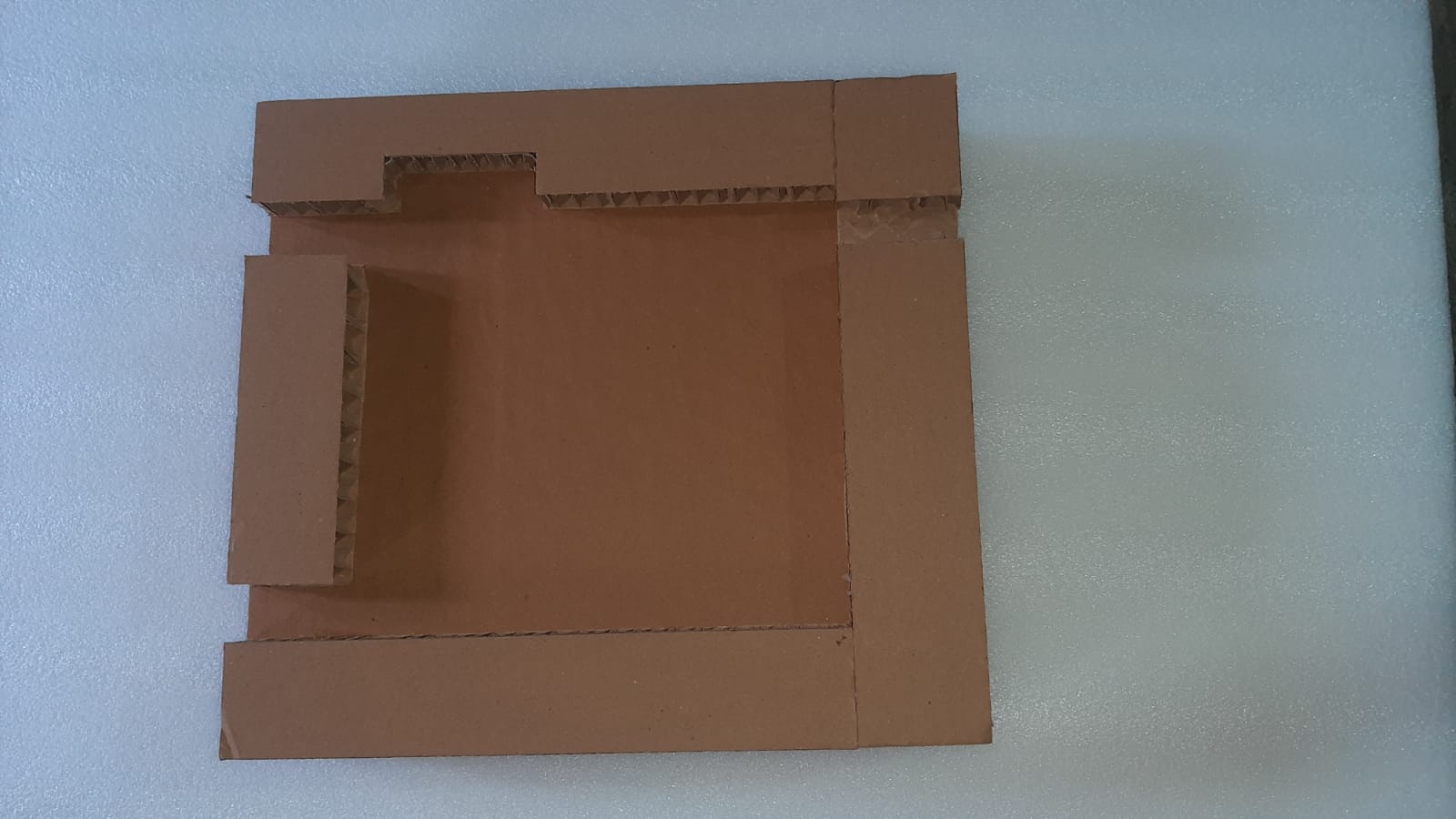 | Paper Honeycomb Packaging Paper Honeycomb is a lightweight and strong packaging material designed for protective packaging, cushioning and product separation. View product → |
Frequently asked questions
How does paper honeycomb packaging manage shipping forces?
Cell walls deform during impact or compression, spreading loads across a wider panel area and reducing force at individual contact points.
How should honeycomb protection be laid out for fragile products?
Place cushioning at impact zones, support weak surfaces, separate products and prevent movement inside the carton.
How do you choose honeycomb cell size, thickness and bearing area?
Select them according to product weight, fragility, expected forces and the size of the surfaces carrying the load.
How do you test paper honeycomb packaging before production?
Use drop, compression and vibration tests that reflect the packed product’s shipping conditions, then inspect for damage and movement.